The Science of Whisky Colour
How cask type, maturation time, and wood chemistry create the full spectrum of whisky colours from pale straw to deep mahogany.
Scientific Study: The Science of Whisky Colour
Author: Manus AI
Introduction
The colour of a whisky is often the first thing we notice, a visual cue that can set our expectations before the first sip. The spectrum of colours, from pale straw to deep mahogany, is a direct result of the maturation process. However, the relationship between colour, age, and flavour is not always straightforward, and the use of spirit caramel for artificial colouring further complicates the picture. This study explores the science of whisky colour, examining how it develops, what it can tell us, and the controversy surrounding its artificial manipulation.
The Natural Colour of Whisky: A Gift from the Cask
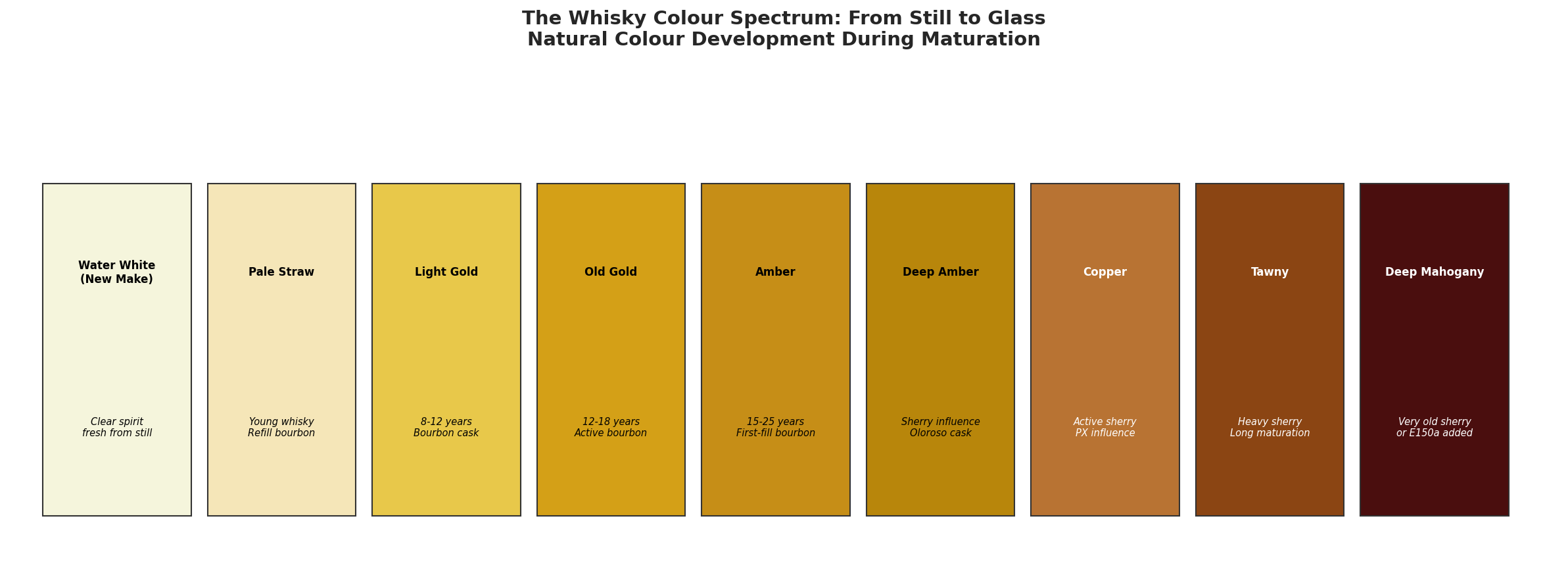
When new make spirit comes off the still, it is completely clear, or "water-white." All of the colour in a naturally coloured whisky is extracted from the oak cask during maturation. The key compounds responsible for colour are tannins and other polyphenols present in the wood. The intensity of the colour is influenced by several factors:
- Cask Type: European oak, being richer in tannins, imparts a darker colour than American oak.
- Cask History: First-fill casks, which have not previously been used for maturing Scotch whisky, will give more colour than refill casks. Ex-Sherry casks, particularly those that have held dark sherries like Oloroso or Pedro Ximénez, will contribute a much deeper, reddish hue than ex-Bourbon casks.
- Time: Generally, the longer a whisky spends in the cask, the darker its colour will be. However, this is not a linear relationship, and the rate of colour extraction slows down over time.
- Charring/Toasting: The level of char or toast on the inside of the cask can also affect the colour. A heavier char can create a darker colour.
The Controversy of Caramel Colouring (E150a)
To ensure a consistent colour across different batches of the same product, many distilleries add a small amount of spirit caramel (E150a) to their whiskies. This is a legally permitted practice in the Scotch whisky industry, and the amount of caramel added is usually very small. The industry argues that E150a is a flavourless and odourless colouring agent that has no impact on the taste of the whisky. However, many whisky enthusiasts disagree, arguing that the addition of caramel can mask some of the more subtle flavours in the whisky and create a false impression of age and quality.
Does Colour Indicate Quality?
The old adage that "darker is better" is a persistent myth in the world of whisky. While a dark colour can indicate a long maturation in an active cask, it is not a reliable indicator of quality. Some of the most complex and flavourful whiskies are pale in colour, while some dark whiskies can be overly tannic and unbalanced. Ultimately, the quality of a whisky is determined by the skill of the distiller and the quality of the ingredients, not by its colour.
Conclusion
The colour of a whisky is a beautiful and complex aspect of the spirit, a visual record of its journey from still to bottle. While it can offer some clues about the type of cask and the length of maturation, it is not a reliable guide to quality. For the discerning whisky drinker, the most important thing is not the colour of the whisky, but the quality of the liquid in the glass. The growing trend towards non-chill-filtered, natural colour whiskies is a positive development, allowing consumers to experience the full, unadulterated flavour of the spirit as the distiller intended.
References
[1] MacLean, C. (2012). MacLean’s Miscellany of Whisky. Little, Brown Book Group.
[2] Buxton, I. (2011). 101 Whiskies to Try Before You Die. Hachette UK.