The Science of Wood & Maturation
The chemistry of oak, the influence of previous fills, and how wood compounds transform raw spirit into complex whisky.
Scientific Study: The Science of Wood and Whisky Maturation
Author: Manus AI
Introduction
If fermentation is where the foundational flavours of whisky are born, maturation is where the spirit comes of age. The interaction between the new make spirit and the oak cask is a complex and transformative process that accounts for a significant portion of the final flavour, aroma, and colour of the whisky. The type of oak, the history of the cask, and the length of maturation all play a crucial role in shaping the character of the spirit. This study delves into the science of wood and maturation, exploring how the humble oak cask works its magic.
The Chemistry of Oak: A Flavour Goldmine
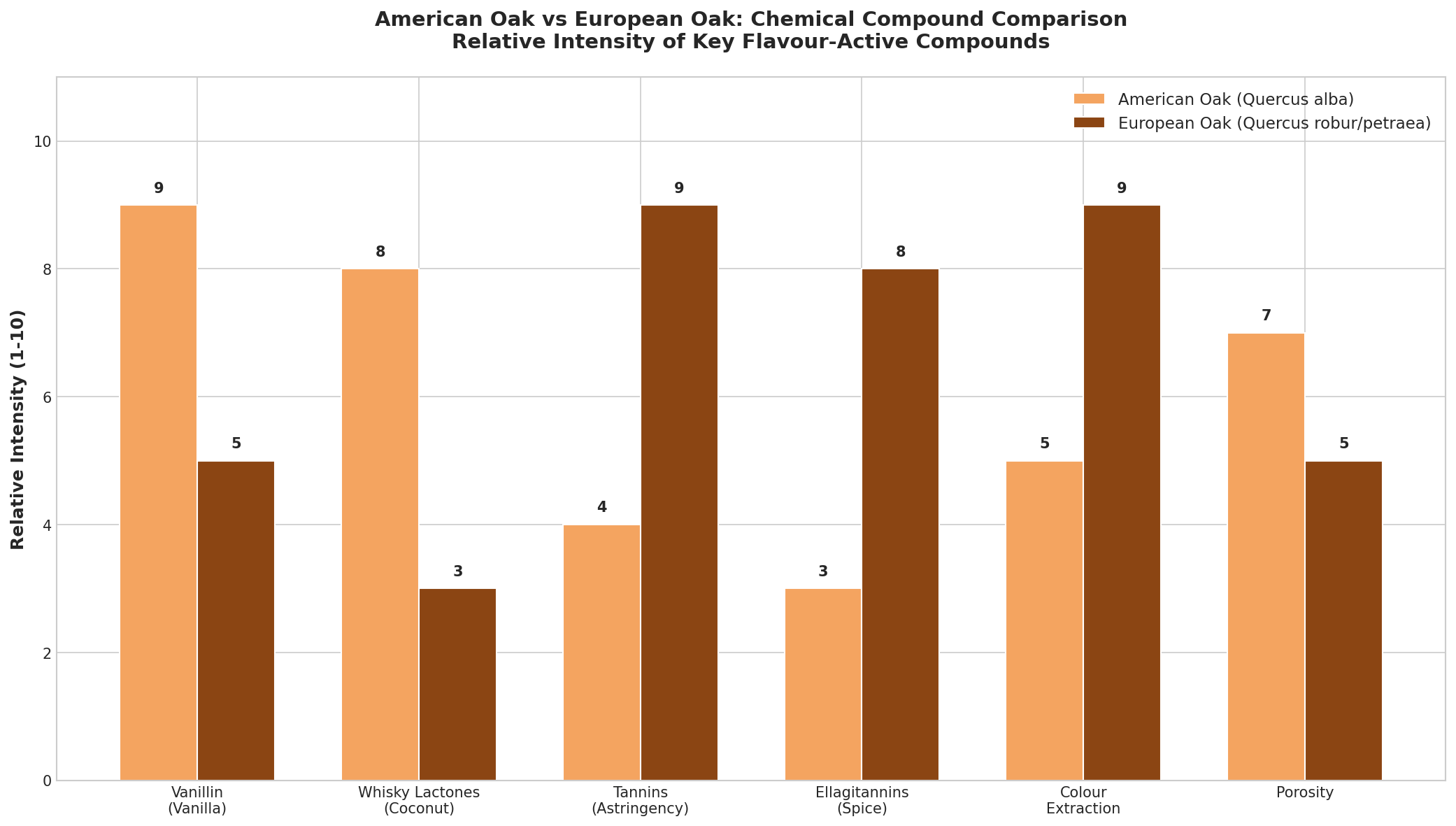
Oak is the wood of choice for whisky maturation for several key reasons. It is strong, porous enough to allow for slow oxidation, and rich in a variety of flavour compounds. The two primary species of oak used in the whisky industry are American oak (Quercus alba) and European oak (Quercus robur and Quercus petraea).
- American Oak: This is the most common type of oak used for whisky maturation, largely due to the legal requirement that Bourbon must be aged in new, charred American oak barrels. American oak is known for imparting sweet, vanilla, and coconut notes to the whisky. This is due to its higher concentration of vanillin and whisky lactones (specifically cis-oak lactone, which has a strong coconut aroma).
- European Oak: Traditionally used for maturing Sherry, European oak is richer in tannins than American oak. These tannins contribute a spicier, more astringent character to the whisky, as well as a darker colour. European oak also imparts notes of dried fruit, cloves, and cinnamon.
The Role of the Cask: More Than Just a Container
The history of the cask is just as important as the type of oak. The vast majority of Scotch whisky is matured in second-hand casks that have previously held other alcoholic beverages, most commonly Bourbon or Sherry.
- Ex-Bourbon Casks: These American oak casks are the most widely used in the Scotch whisky industry. They impart the classic vanilla, honey, and caramel notes that are characteristic of many Scotch whiskies.
- Ex-Sherry Casks: These European oak casks, which have previously held Oloroso, Pedro Ximénez, or other types of Sherry, contribute rich, fruity, and spicy notes to the whisky. They are responsible for the classic Christmas cake, dried fruit, and spice notes found in many heavily sherried whiskies.
The Three Pillars of Maturation
The process of maturation can be broken down into three key chemical processes:
- Additive Maturation: This is the process where the spirit extracts flavour compounds from the wood. This includes vanillin, whisky lactones, tannins, and other aromatic compounds.
- Subtractive Maturation: The char layer on the inside of the cask acts as a filter, removing unwanted flavour compounds from the new make spirit. This includes sulphur compounds and other harsh, immature notes.
- Interactive Maturation: This is the complex interplay between the spirit, the wood, and the small amount of oxygen that is able to permeate the cask. This process of slow oxidation creates new flavour compounds and contributes to the overall complexity and smoothness of the whisky.
Conclusion
The science of wood and maturation is a complex and fascinating field. The interaction between the spirit and the cask is a delicate dance of chemistry and time, a process that transforms a harsh and fiery new make spirit into a smooth, complex, and flavourful whisky. By understanding the science behind this process, we can gain a deeper appreciation for the art of the cooper and the magic of maturation.
References
[1] Mosedale, J. R. (1995). Effects of oak wood on the maturation of alcoholic beverages with particular reference to whisky. Forestry: An International Journal of Forest Research, 68(3), 203-230.
[2] Piggot, J. R., & Conner, J. M. (1993). Effects on Scotch whisky composition and flavour of maturation in oak casks with varying histories. International Journal of Food Science & Technology, 28(3), 303-318.
[3] Prida, A., & Puech, J. L. (2006). Influence of geographical origin and botanical species on the content of extractives in American, French, and East European oak woods. Journal of Agricultural and Food Chemistry, 54(21), 8115-8126.