The Science of Peat & PPM
Explore the chemistry of phenols, peat sources, and why PPM numbers don't always correlate with perceived smokiness.
Scientific Study: PPM and Peat - A Study of Terroir and Smoke
Author: Manus AI
Introduction
The smoky, phenolic character of many Scotch whiskies is one of its most defining, and often polarizing, attributes. This flavour is imparted during the malting process, where damp malted barley is dried over a peat fire. The smoke from the burning peat contains a complex array of chemical compounds known as phenols, which adhere to the surface of the barley grains. The concentration of these phenols is measured in Phenol Parts Per Million (PPM), a metric that has become a benchmark for the "peatiness" of a whisky. However, the PPM value of the malted barley is only one part of a much more complex story. The geographical origin of the peat, its botanical composition, and the specifics of the kilning and distillation process all play a crucial role in shaping the final smoke character of the whisky. This study delves into the science behind peat and PPM, exploring how the terroir of the peat bog translates into the sensory experience in the glass.
The Science of Peat: Coastal vs. Mainland
Peat is an accumulation of partially decayed vegetation or organic matter, unique to natural areas called peatlands or mires. In Scotland, peat bogs have been forming for thousands of years, and their composition varies significantly depending on the local flora and environmental conditions. This variation is the foundation of peat terroir. The two primary categories of peat used in the Scotch whisky industry are coastal (or maritime) peat and mainland (or inland) peat.
Coastal Peat
Found in the windswept islands and coastal regions of Scotland, most famously on Islay and Orkney, coastal peat is defined by its proximity to the sea. Its composition is heavily influenced by the maritime environment:
- Botanical Composition: Coastal peat is primarily composed of sphagnum moss, heather, and other salt-tolerant plants. Crucially, it also contains a significant amount of decomposed seaweed and other marine organisms, which are rich in iodine, bromine, and other halogens.
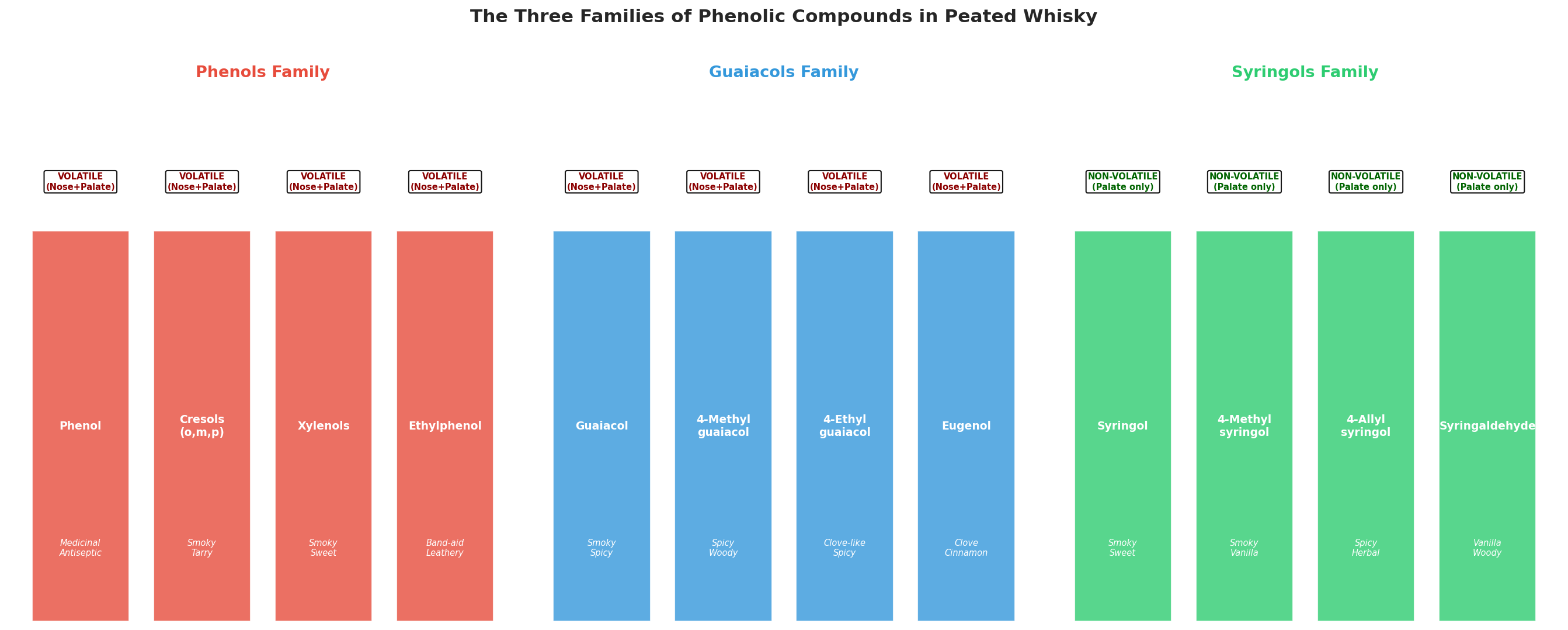
- Chemical Profile: When burned, the marine-rich organic matter in coastal peat releases a higher concentration of certain phenolic compounds, particularly phenols and guaiacols, as well as nitrogenous compounds. The presence of seaweed contributes to the formation of compounds that give rise to the characteristic medicinal, iodine-like, and antiseptic aromas associated with Islay whiskies.
- Flavour Profile: Whiskies made with coastal peat are often described as having a more aggressive, pungent, and medicinal smokiness, with notes of iodine, tar, brine, and seaweed. The smoke is often described as being "wetter" and more savoury.
Mainland Peat
Inland peat bogs, such as those found in the Highlands and Speyside, have a different botanical makeup due to their distance from the sea:
- Botanical Composition: Mainland peat is predominantly formed from the decay of trees (like pine and birch), shrubs, and heather. It has a much higher content of woody material and lignin compared to coastal peat.
- Chemical Profile: The higher lignin content in mainland peat leads to a different ratio of phenolic compounds when burned. It produces a greater guaiacol-to-phenol ratio. Guaiacols are responsible for the more aromatic, spicy, and woody smoke notes.
- Flavour Profile: Whiskies made with mainland peat tend to have a more earthy, woody, and aromatic smokiness. The smoke is often described as being "drier" and more reminiscent of a campfire or burning heather, with notes of smoked meats, leather, and spice.
The Octomore Paradox: Beyond PPM
The Octomore series from Bruichladdich distillery on Islay provides a fascinating case study in the complexities of peat and PPM. Octomore whiskies are famous for being the most heavily peated in the world, with PPM levels often exceeding 200 and even reaching over 300 PPM. Logically, one would expect these whiskies to be overwhelmingly smoky and phenolic. However, they are often described as being surprisingly elegant, complex, and balanced, a phenomenon known as the Octomore Paradox. This paradox highlights several key points:
- PPM is a measure of the malt, not the final spirit. A significant portion of the phenolic compounds are lost during the distillation process. The distiller's choices, such as the speed of distillation and the cut points of the spirit run, have a massive impact on which phenols make it into the final new make spirit.
- Not all phenols are created equal. The overall PPM value does not tell you the relative concentrations of the different phenolic compounds. A high PPM whisky might have a phenolic profile that is less aggressive on the palate, even if the overall concentration is high.
- Maturation plays a crucial role. Over time in the cask, the phenolic compounds evolve and integrate with the wood-derived flavours. The sharp, aggressive notes of a young, heavily peated whisky can soften and transform into more complex and nuanced smoky flavours.
Conclusion
The smokiness of a peated whisky is far more than just a number on a label. It is a direct expression of the land from which the peat was harvested. The terroir of the peat bog, shaped by millennia of geological and botanical history, imparts a unique chemical signature that is then translated, through the craft of the distiller, into a complex and evocative sensory experience. From the briny, medicinal smoke of Islay to the earthy, heathery smoke of the Highlands, the flavour of peat is a powerful reminder of the deep connection between whisky and the Scottish landscape.
References
[1] Harrison, B. (2009). The impact of peat source on the flavour of Scotch malt whisky. In Distilled IV. Nottingham University Press.
[2] Broom, D. (2016). Phenol fables: peat’s secrets uncovered. Scotchwhisky.com.
[3] Buxon, I., & Hughes, P. (2012). The Science and Commerce of Whisky. Royal Society of Chemistry.